Facilitator training
The OCNLR Level 4 Certificate in Facilitating Equine Assisted Learning (qualification number 603/0601/4) is the first regulated qualification of its kind for facilitators. It is delivered as blended learning — face to face and online — and built with progression in mind.
Begin with Handling and Managing Horses in Equine Assisted Learning, progress to the Level 3 Communication and Safeguarding units, then complete the final three units for the full Level 4.
From the training field
Who it is for
The Level 3 units are suitable for volunteers, new facilitators, support staff and people wishing to work as assistants in an equine assisted learning environment. The Level 4 is for those who will plan and run sessions themselves. It can take up to a year to complete the Horse Awareness, Communication and Safeguarding units, and you do not have to carry on to the next level if that is sufficient for you.
How to apply
Everyone starts with the two-hour online Introduction, where you can ask questions, assess your skills against the criteria and hear about the training structure and fees.
The six mandatory units
All six units are mandatory. GLH is guided learning hours; TQT is total qualification time.
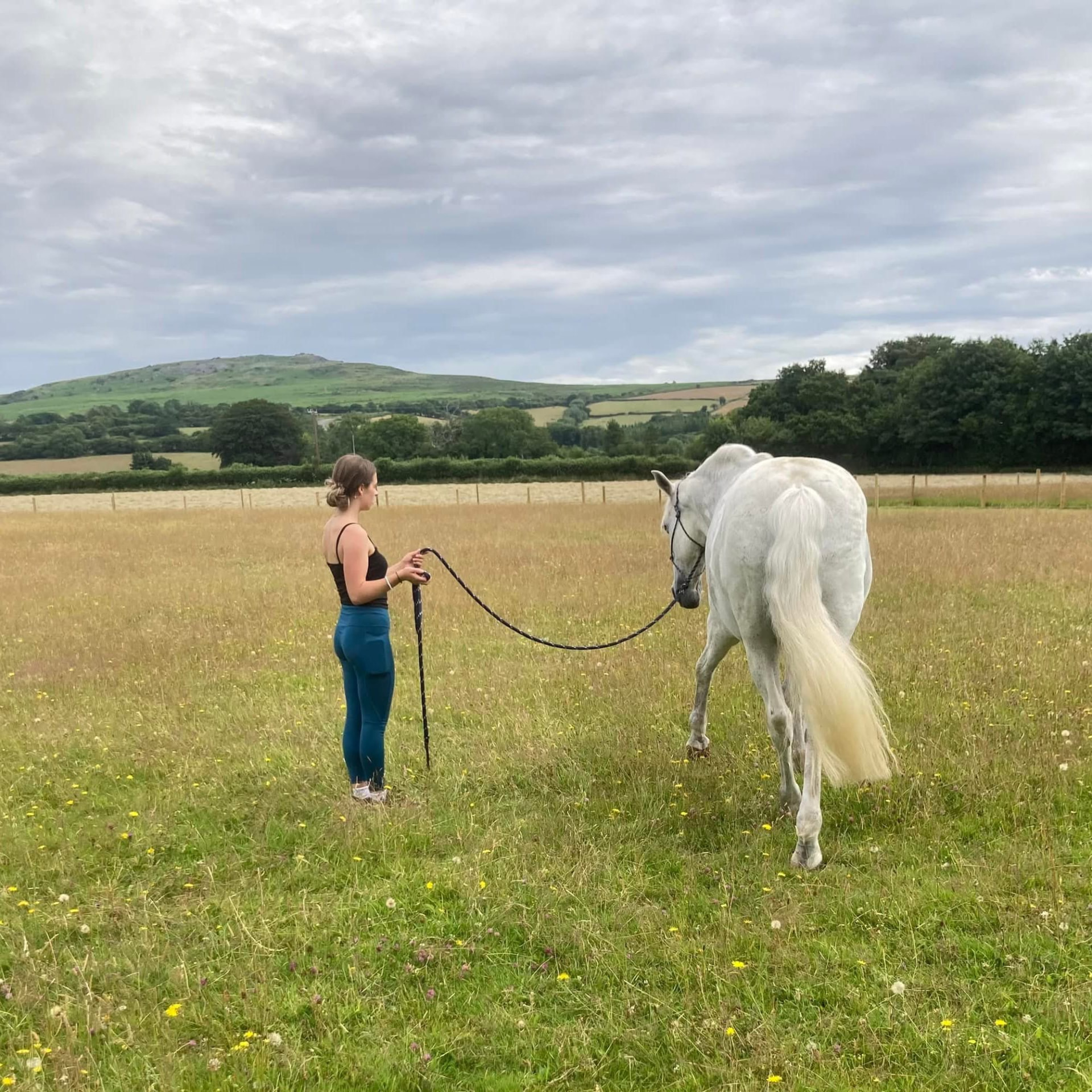
Ground-based horse handling and managing horses. Covers working with loose horses as well as those on a halter and lead rope.
Communication, potential barriers to effective communication, and identifying your own blocks to active listening.
Safeguarding children, young people and vulnerable adults: policies and practice, including safer recruitment.
The roles and responsibilities of the facilitator, how to conduct risk assessments, and preparing session plans and schemes of work.
Facilitating sessions for individuals and groups, demonstrating the skills developed in the other units.
Identifying a range of behaviours, looking at potential triggers, and how to manage the behaviour of learners.
Horse awareness comes first
The Level 3 Award in Handling and Managing Horses is the only qualification available specifically for horse professionals and others within equine assisted learning. It is open to anyone who would like to learn more about ground-based horsemanship skills and runs throughout the year. You have access to the course content for twelve months and can move at your own pace with your own horses, sharing video of your horsemanship either loose in a round pen or on a halter and lead rope.
The assessment criteria include herd dynamics and how horses learn, working with loose horses without a halter or lead rope, making use of a round pen, approaching, haltering and leading, reinforcing desired behaviour, and increasing confidence.
"I thought I knew a lot about horses but this course has taught me to look at them in a completely different way."
Communication and safeguarding
Communication skills are fundamental to the non-judgmental, learner-led approach that is the basis of every session with the horses. The course includes non-verbal communication, active and empathic listening, Day's 3Rs of Communication, analysing transactions, praise, offering help and interrupting thought. The Safeguarding unit covers policies and procedures including safer recruitment, recognising possible signs and symptoms of abuse, and what to do if a learner makes a disclosure.
"Your verbal communication is an interruption to someone else's thought process."
Plan, facilitate and manage behaviour
The Level 4 brings together everything learnt so far, building on horsemanship, communication and safeguarding. Topics include making the most of the opportunities presented by the horse's natural behaviour in their environment, roles and responsibilities, risk assessments, different ways of planning sessions, working with individuals and groups, and managing the behaviour of learners of all ages. You will complete a minimum of 50 hours of practice sessions, planning and reviewing the learning, so that the skills become embedded.
"I was amazed at how in-depth the facilitator training was and how much I learnt about teaching and learning. I have changed some of the ways that I work in school because of my experiences on the facilitator training."
Training and assessment
Face to face sessions cover the Horse Awareness, aspects of the communication skills and the facilitator training itself. Most training happens at our base near Tavistock, Devon, with some courses at other venues.
Some assessment activities are completed during the online programme. The rest is presented in a portfolio showing how you have met the assessment criteria. You will video your sessions for remote assessment, with feedback and suggestions for improvement.
Even if you complete all the training and submit your portfolio, there is no guarantee you will be assessed as competent. Once your portfolio is successfully verified you receive your certificate.
EAQ expects all facilitators to undertake at least 50 hours of continuing professional development each year. CPD materials and dates sit in the members' area.
Fees
You must take part in the two-hour Introduction before enrolling on the Level 3 or Level 4 qualifications.
The underpinning knowledge for the unit 'Handling and Managing Horses in Equine Assisted Learning', looking at ground-based handling of horses.
The underpinning knowledge for the two units on communication and safeguarding for equine assisted learning.
The underpinning knowledge for planning, facilitating and managing the behaviour of learners of all ages in equine assisted learning.
Book and pay for all the training in advance and receive a discount of £200 on the fees.
Fees taken from the current facilitator training brochure — confirm before publishing if they have changed.